The Journey of Leather: From Heritage Origins to Timeless, Sustainable Craftsmanship
Leather is one of humanity’s oldest and most enduring materials. Long before synthetic textiles dominated modern manufacturing, our ancestors discovered how to transform animal hides into durable, protective garments and footwear. Today, in an era dominated by fast fashion and petroleum-based plastics, understanding the true origins, processing, and environmental significance of genuine leather helps us appreciate why it remains a gold standard for longevity and sustainability.
The Origins of Leather
The history of leather dates back to the Paleolithic era. Early humans utilized animal skins hunted for food to protect themselves from harsh climates. Initially, skins were simply dried or rubbed with animal fats to prevent rotting. Over millennia, civilizations such as the ancient Egyptians, Greeks, and Romans refined these methods, discovering that certain plant extracts (tannins) could permanently preserve skin, turning a perishable organic byproduct into a supple, wearable material.
From Raw Skin to Wearable Shoe Leather: The Tanning Process
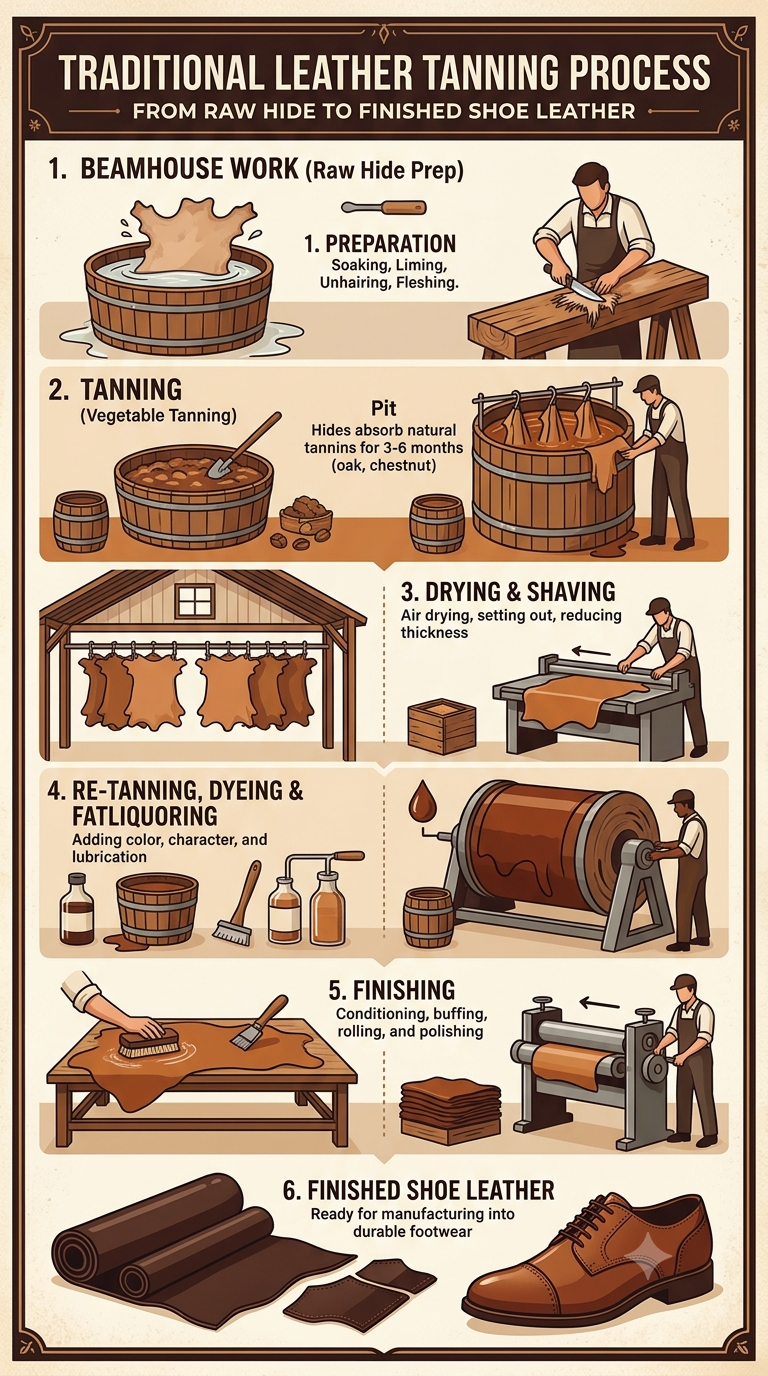
Transforming a raw hide from a slaughterhouse into fine footwear requires meticulous craftsmanship and science. The step-by-step process includes:
- Curing: Immediately after removal, raw hides are salted or dried to halt bacterial growth and preserve them during transport.
- Beamhouse Operations (Preparation):
- Soaking: Rehydrating the hide and cleaning away dirt and blood.
- Liming: Treating the hide with lime and water to loosen hair and remove natural fats.
- Fleshing & Unhairing: Scraping away residual flesh and remaining hair.
- Bating & Pickling: Adjusting the pH balance to prepare the collagen fibers for tanning.
- Tanning: The critical transformation stage. Hides are treated with tanning agents—either traditional vegetable tannins (bark, leaves) or modern mineral agents (like chromium)—which bind to the collagen proteins, permanently preventing decay and creating stable leather.
- Crusturing & Finishing: The tanned leather is split, shaved to a uniform thickness, dyed, lubricated (fatliquored) for softness, dried, and finished with protective surface coatings to achieve the desired texture and sheen.
Crafting Leather Garments
Once the leather is finished, skilled artisans shape it into garments and shoes:
- Selection & Cutting: Hides are inspected for natural grain and flaws, then precisely cut using patterns.
- Skiving & Splitting: Edges are thinned to prevent bulkiness at the seams.
- Assembly & Stitching: Heavy-duty industrial sewing machines stitch panels together using high-tensile threads designed to withstand structural stress.
- Final Detailing: Adding hardware, linings, and waterproofing treatments to ready the product for daily wear.
The Environmental Reality: What Happens Without Upcycling?
Every year, the meat and food industry generates massive quantities of animal hides as byproducts. If these raw skins are not collected, recycled, and converted into finished leather, they present a staggering environmental crisis:
- Biological Hazard: Millions of tons of raw hides would head straight to landfills or open dumping grounds, where they would putrefy rapidly.
- Public Health Risks: Unregulated decomposition attracts pests, breeds dangerous bacteria, and creates severe biohazards and foul odors in local communities.
- Resource Waste: Discarding these hides squanders a natural material that could otherwise serve humanity for decades, forcing a heavier reliance on synthetic alternatives.
Proper tanning and upcycling effectively transform potential agricultural waste into high-value, long-lasting goods, embodying a circular economy model long before the term existed.
The Hidden Side Effects of Synthetic Leather
While often marketed as cruelty-free or eco-friendly, synthetic “leather” is predominantly plastic.
- Microplastic Pollution: As synthetic items wear out, they shed microplastics into our waterways and soil.
- End-of-Life Dilemma: Unlike organic leather, which eventually breaks down, synthetic garments sit in landfills for centuries.
- Chemical Production: Manufacturing PVC and PU relies heavily on petrochemical extraction and harsh solvents, leaving a significant carbon footprint.
Conclusion
Original leather is a triumph of ancient sustainability turning a waste stream into a durable, breathable, and repairable companion for life. By investing in genuine leather goods, you choose timeless craftsmanship that reduces plastic waste and honors a heritage of responsible resourcefulness.